Module 5 · Trading Sessions, Timing & Market Conditions · Lesson 1
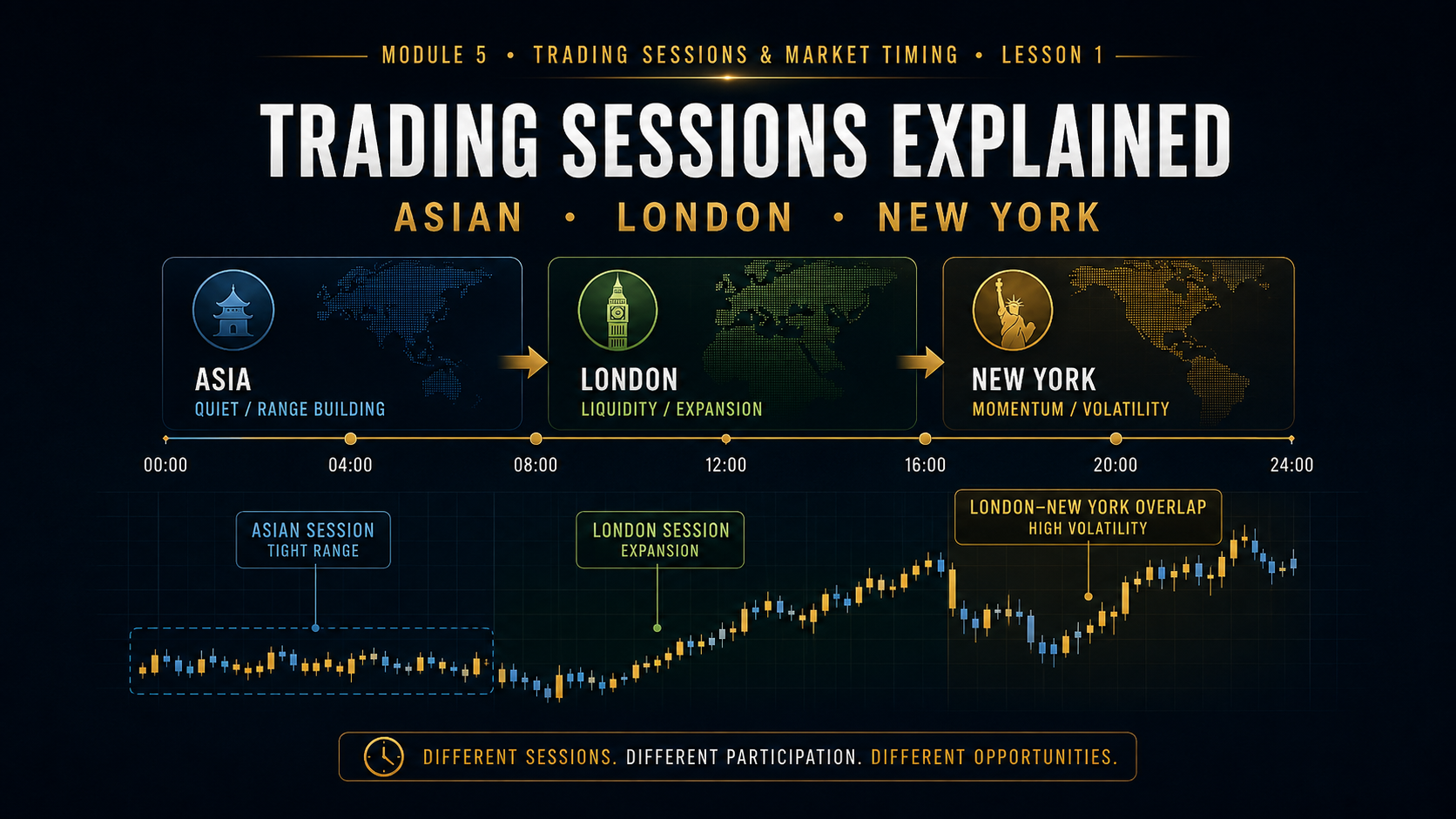
Trading Sessions Explained: Asian, London & New York
Learn how the global trading day changes from Asia to London to New York, why volatility and liquidity shift throughout the day, and how session timing can dramatically affect the quality of a trading setup.
Asian Session
London Session
New York Session
Market Timing
Financial markets trade around the clock, but they do not behave the same way around the clock.
At certain times, price may move slowly inside narrow ranges. A few hours later, the same market can explode through support and resistance with strong momentum.
The difference is often participation.
A good setup at the wrong time of day can behave very differently from the same setup during an active session.
Understanding trading sessions helps you know when liquidity enters the market, when volatility tends to expand and when patience may be more valuable than forcing a trade.
Lesson Objectives
What You’ll Learn
✓ How the global trading day is structured
✓ Characteristics of the Asian session
✓ Why London is highly active
✓ What changes during New York
✓ Why session overlaps matter
✓ How session timing affects trade quality
Why Markets Trade Around the Clock
Foreign exchange and many global financial products trade across multiple international financial centers.
As one region finishes its business day, another region becomes active.
Asia → London → New York → Asia
This creates an almost continuous trading cycle during the business week.
Trading Session Times
Session times can shift relative to your local clock because different countries change daylight-saving schedules at different times.
For that reason, think in terms of financial-center opening hours rather than memorizing one permanent local-time conversion.
| Session |
Primary Financial Center |
Typical Character |
| Asian |
Tokyo / Asia-Pacific |
Often quieter, more range-bound |
| London |
London / Europe |
Higher liquidity and expansion |
| New York |
New York / North America |
High activity, news and overlap volatility |
The Asian Trading Session
The Asian session begins the major global trading cycle.
Compared with London and New York, many major currency pairs can experience lower average volatility during portions of this session.
Common Asian Session Characteristics
• Narrower intraday ranges in many major pairs
• More consolidation
• Less aggressive momentum than London
• Important activity in JPY, AUD and NZD-related markets
• Range highs and lows can become important later in the day
The Asian Range
Traders often monitor the high and low created during the quieter overnight period.
Asian High: Upper boundary of overnight price action.
Asian Low: Lower boundary of overnight price action.
Later Use: These boundaries may become breakout, liquidity or rejection areas during London.
Example: Asian Range Before London
Asian high: 1.0850
Asian low: 1.0820
Range size: 30 pips
London traders now have two visible overnight liquidity boundaries.
The London Trading Session
London is one of the most important global financial centers and is often associated with a major increase in market participation.
This is where overnight consolidation can transition into meaningful directional movement.
Typical London Characteristics
✓ Increased liquidity
✓ Larger candle ranges
✓ Breakouts from overnight consolidation
✓ Stronger EUR and GBP activity
✓ Liquidity sweeps around Asian highs and lows
✓ More opportunity for intraday momentum
Why the London Open Matters
The opening portion of London can bring a sharp change in volatility.
Institutional participants, banks, funds and other market participants become more active as Europe begins its business day.
A quiet chart can become a very different market once London participation increases.
London Can Sweep the Asian Range Before Moving
One common intraday pattern is a temporary break of an Asian-session high or low followed by rejection.
Example
Asian High → London Sweep Above → Rejection → Bearish Structure Shift
This connects the session concepts directly with the liquidity and price-action lessons you learned earlier.
London Can Also Produce Genuine Breakouts
Not every move outside an overnight range is a false breakout.
Price approaches Asian high.
Strong bullish candle closes above the range.
Price holds the breakout.
Retest remains above the old Asian high.
The market may be accepting higher prices rather than rejecting them.
The New York Trading Session
New York introduces another major wave of liquidity and participation.
The early New York period is especially important because London is still open, creating one of the most active periods of the trading day.
Typical New York Characteristics
✓ High USD-related activity
✓ Major U.S. economic releases
✓ Strong index and equity participation
✓ London/New York overlap
✓ Continuation or reversal of the London move
✓ Strong intraday liquidity
The New York Open
The New York morning can produce some of the strongest intraday moves because currency, futures, equities and economic data can all become active within the same broad window.
The New York open is not automatically a buy or sell signal. It is a period where you should expect market conditions to change.
The London–New York Overlap
The overlap occurs while European markets remain active and North American participation is entering.
Why It Matters
More Participants → More Liquidity → More Volume → Greater Potential Volatility
This often makes the overlap attractive to active intraday traders, but increased volatility also increases execution risk.
New York Can Continue the London Move
London breaks major resistance.
Price forms bullish structure.
New York opens above the broken level.
Pullback holds as support.
New York may extend the existing bullish move.
New York Can Also Reverse the London Move
A strong London move can become extended before New York begins.
London rallies aggressively.
Price reaches major resistance.
New York sweeps the London high.
Bearish rejection forms.
New York may reverse part or all of the London move.
Session Highs and Lows Become Important Reference Points
Asian High
Asian Low
London High
London Low
Previous Day High
Previous Day Low
These levels can become support, resistance, breakout areas, liquidity pools or profit targets.
Volatility Changes Throughout the Day
The market does not maintain one constant level of activity.
| Period |
Typical Activity |
Common Environment |
| Asian |
Lower to moderate |
Ranges / slower movement |
| London Open |
Increasing |
Expansion / sweeps / breakouts |
| London–NY Overlap |
High |
Strong momentum and volatility |
| Late New York |
Often declining |
Slower movement / consolidation |
Liquidity Can Affect Spreads and Execution
High-liquidity periods can often provide more efficient execution than very quiet market periods, although conditions vary by instrument and broker.
Around session changes or major news, however, volatility can rise sharply and spreads can temporarily widen.
More volatility can create more opportunity — but it also increases the importance of disciplined execution and risk control.
Different Instruments Have Different Active Windows
Not every market is equally active during every session.
EUR & GBP Pairs
Often become more active as European markets open.
USD Pairs
Frequently active during London and New York.
U.S. Indices
Especially active around the New York cash-market open.
Gold
Can see strong activity around London, New York and U.S. economic releases.
What Is the Best Trading Session?
There is no single best session for every trader.
The answer depends on the instrument, strategy, lifestyle and type of market behavior your system is designed to trade.
Range Trader: May prefer quieter conditions.
Breakout Trader: May prefer expanding session opens.
Momentum Trader: May focus on London/New York overlap.
Equity Index Trader: May focus heavily on the New York open.
Time Can Be Part of Your Trading Setup
Many traders define a specific session window in their trading plan.
Example Rule
“I only take intraday setups during the London session and the first half of New York.”
A time filter can help prevent technically valid-looking setups from being taken during conditions the strategy was never designed for.
Avoid Forcing Trades During Dead Hours
Slow markets can tempt traders to manufacture opportunities because nothing is happening.
Candles are tiny.
Price is overlapping heavily.
No meaningful liquidity is entering.
Trader becomes bored.
Boredom becomes the reason for the trade.
The market does not owe you a setup just because you opened the chart.

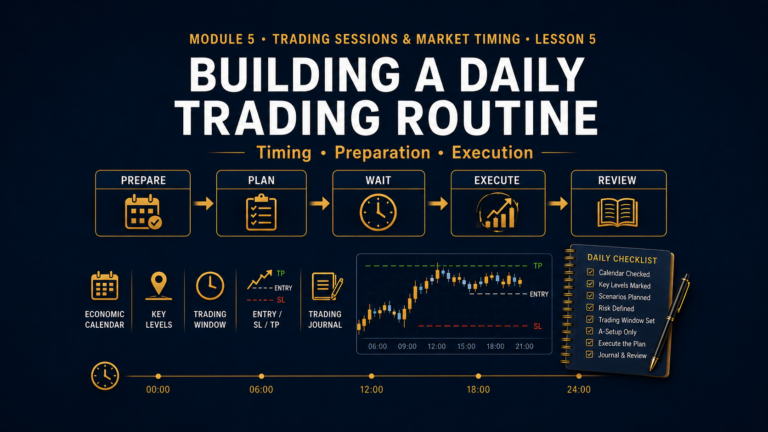 13 min
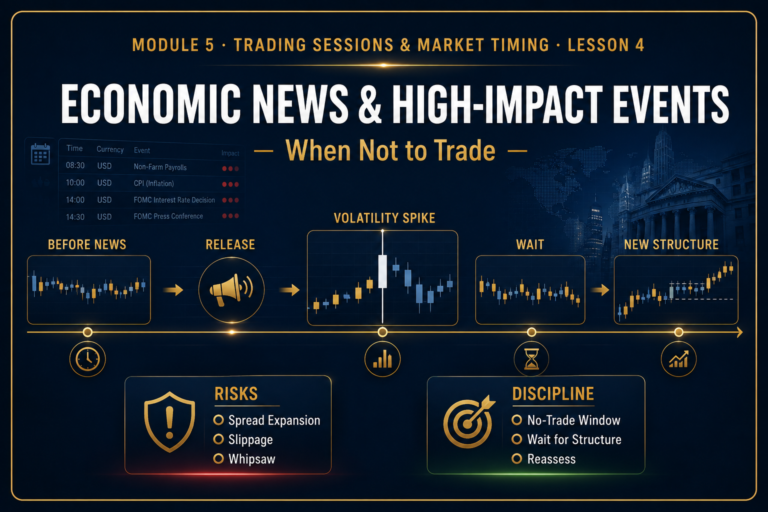 11 min
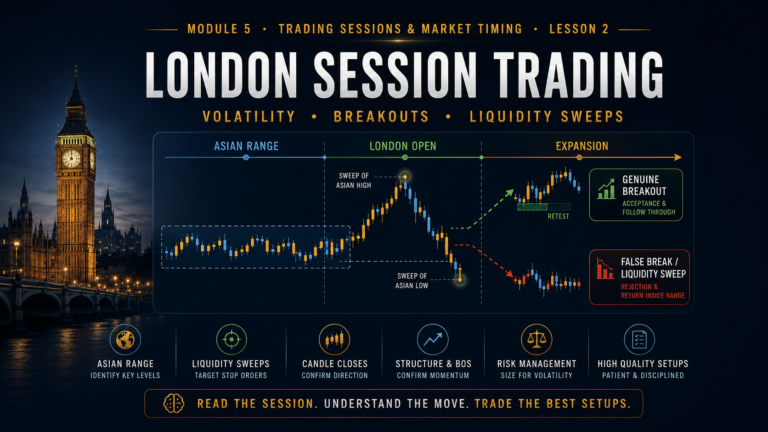 11 min